Louis Vuitton: The Illustrated World of a Fashion Icon
Discover the illustrated world of Louis Vuitton: 172 years of heritage, iconic artist collaborations, investment bags, and cultural legacy on MissBish.

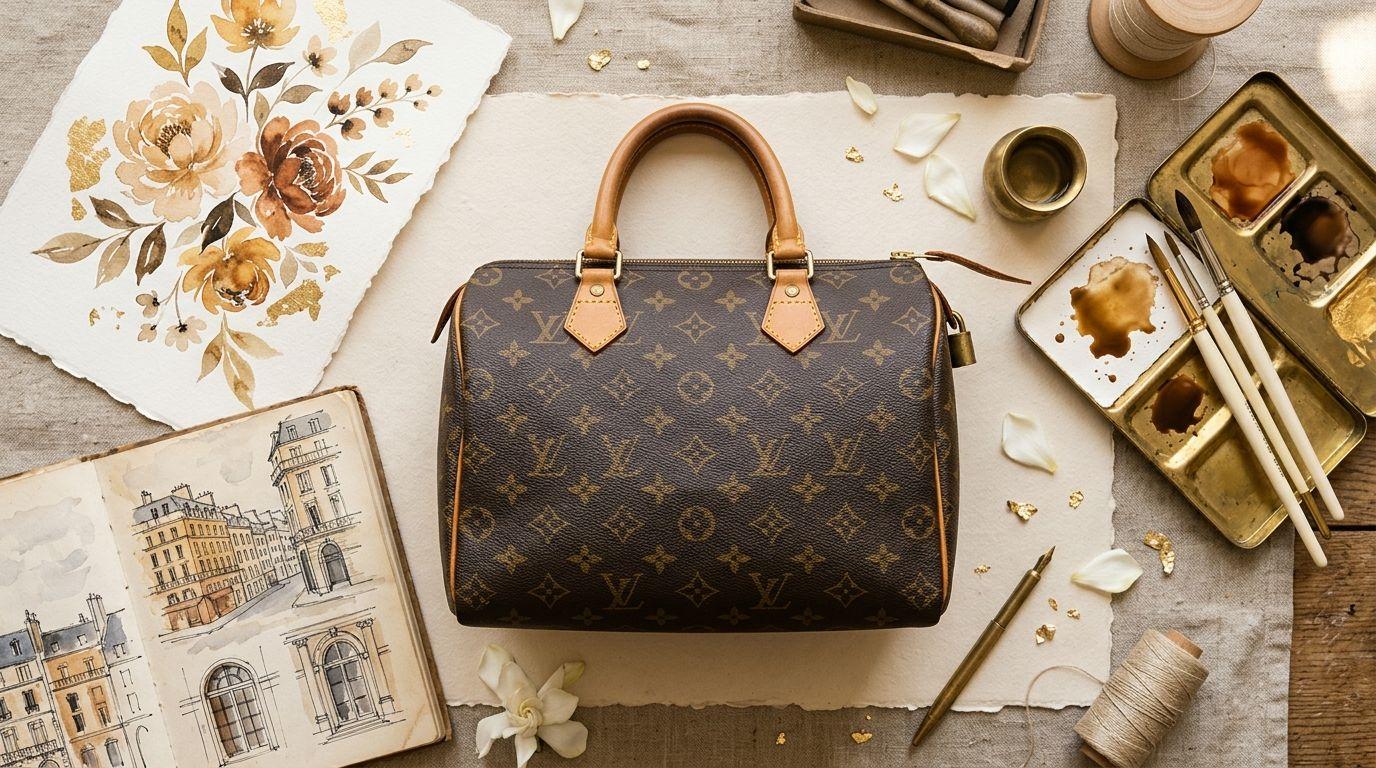
There are fashion brands, and then there is Louis Vuitton. Over 172 years, the Parisian maison has evolved from an artisan trunk-making workshop into the world’s most dominant luxury label, commanding an estimated brand valuation of $23.6 billion (Interbrand).
For the modern MissBish, Louis Vuitton, bold, ambitious, and culturally attuned, represents far more than an interlocking logo. It is a masterclass in creative reinvention, fusing classic French savoir-faire with contemporary art and street culture.
From Jura Runaway to Royal Trunkmaker
The story began in 1835 when 13-year-old Louis Vuitton ran away from his impoverished village in the Jura mountains. Walking roughly 400 kilometres on foot to Paris, he secured an apprenticeship under master layetier-emballeur (custom trunk packer) Romain Maréchal. By 1853, his craftsmanship caught the attention of the French imperial court, earning him an appointment as the personal packer to Empress Eugénie, wife of Napoléon III.
In 1854, Vuitton opened his first Parisian atelier at 4 Rue Neuve-des-Capucines. His breakthrough arrived in 1858 with the Gris Trianon flat-topped trunk. Unlike traditional curved lids designed for open carriages, Vuitton’s stackable, waterproof trunks revolutionised travel aboard modern steamships and locomotives. To thwart bootleggers, his son Georges introduced the chequerboard Damier canvas in 1888, followed by the iconic floral Monogram canvas in 1896—a cryptographic blend of Victorian quatrefoils and Japanese Mon family crests.
The Illustrated Evolution: High Fashion Meets Subculture
What keeps Louis Vuitton vital while other heritage houses fade into museum archives is its appetite for creative disruption. In 1997, Marc Jacobs introduced ready-to-wear and transformed the sacred canvas into a platform for contemporary artists:
- Takashi Murakami (2003): Introduced the 33-colour Multicolore Monogram, defining 2000s Y2K pop culture.
- Supreme (2017): Erased the border between Parisian haute couture and downtown skate culture.
- Virgil Abloh (2018–2021): Championed his architectural "3 Percent Rule," launching the best-selling LV Trainer and diversifying runway storytelling.
- Pharrell Williams (2023–Present): Debuted the pixelated "Damoflage" check during a historic live-streamed takeover of Paris's Pont Neuf bridge.
The 5 Investment Bags Every Collector Must Know
For collectors viewing luxury through an investment lens, value retention depends heavily on silhouette, material, and scarcity. According to resale indices from Rebag and The RealReal, these five models consistently lead secondary market performance:
The 3-Step Collector Authentication Check
With counterfeit goods flooding secondary markets, authenticating genuine Louis Vuitton requires attention to specific craftsmanship markers:
- Hardware & Engravings: Authentic hardware is cast in weighty brass with crisp, clean laser etching—never painted lightweight plastic.
- Date Codes vs. RFID: Pieces manufactured before March 2021 feature an embossed internal factory code; contemporary pieces contain an embedded NFC microchip readable by in-store scanners.
- Pattern Precision: The Monogram motif is perfectly symmetrical across seams and is never haphazardly clipped by corner stitches.
Why the Icon Endures
Louis Vuitton remains unmatched because it treats its archives as living inspiration rather than historical relics. From a penniless teenager walking 400 kilometres to Paris to an international luxury powerhouse operating 500+ direct boutiques, the maison proves that true luxury is not just what you carry—it is the ambition to forge your own path.
Fashion and runway critic specializing in luxury archival curation, avant-garde streetwear crossovers, and seasonal runway discourse across Paris and Milan. Documenting the intersection of high-fashion house codes, subculture, and heritage craftsmanship.
View all articles →Editorial Transparency: MISSBISH editorial content is produced independently. Links included in this review may contain affiliate tracking codes yielding commissions on eligible purchases.
Related Editorial Stories

Miu Miu Women's Tales T-Shirts: The Definitive Archival Collector & Authentication Guide
An investigative exploration into Miuccia Prada’s historic intersection of feminist auteur cinema and collectible streetwear: history, key director editions, market valuation, and physical authentication criteria.


Dawoon Kang, Co-Founder of Coffee Meets Bagel: Redefining Intentional Connection in the App Age
How tech founder Dawoon Kang turned down Mark Cuban’s historic $30M Shark Tank buyout to build a billion-connection relationship platform engineered for female autonomy.


NikeLab x sacai Collection: Chitose Abe’s Masterclass in Deconstructed High-Function Techwear
A retrospective and contemporary appraisal of how sacai shattered the boundaries between Japanese avant-garde silhouettes and Nike athletic performance engineering.